Description:
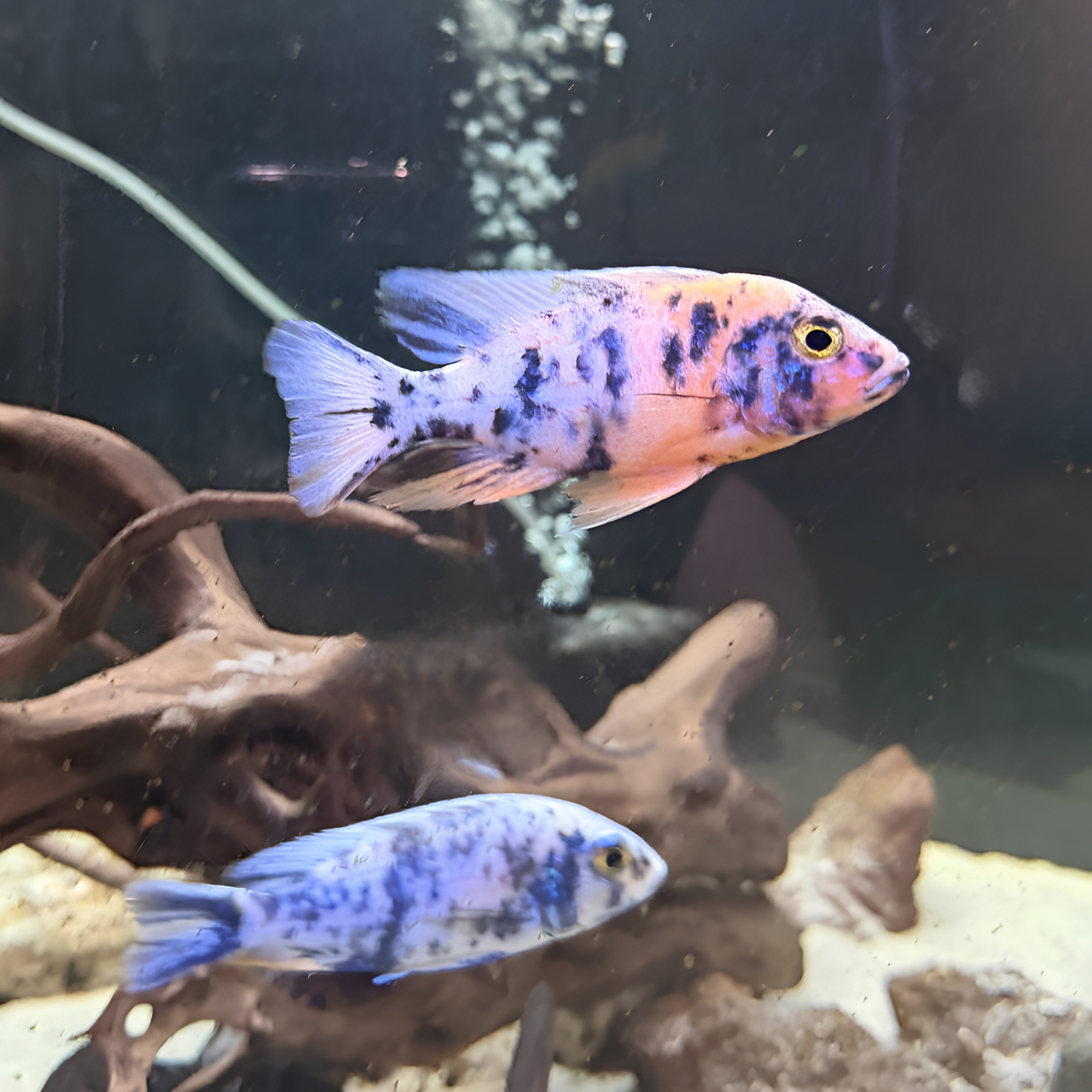
The Marbled OB Peacock Cichlid (Aulonocara sp. OB) is a truly unique African cichlid known for its spectacular and unpredictable colouration. Also commonly called the OB Peacock or Orange Blotch Cichlid, this selectively bred variety is recognised for its distinctive blotched or marbled pattern, with individuals displaying combinations of blue, orange, pink, purple, yellow, and black throughout their bodies and fins. No two fish are exactly alike, making each Marbled OB Peacock a unique addition to an African cichlid aquarium.
The term “OB” stands for Orange Blotch, referring to a naturally occurring colour pattern found in several Lake Malawi Mbuna species. The pattern is characterised by irregular blotches across the body, and through selective breeding, this distinctive trait has been introduced into Peacock Cichlid lines. This is why OB Peacocks can display the characteristic blotched pattern even when the fish itself may be predominantly blue, pink, purple, yellow, or another colour, “OB” refers to the blotched colour pattern and its breeding history, rather than meaning the fish must be orange.
Unlike naturally occurring Peacock varieties, modern Marbled OB Peacocks are selectively bred aquarium varieties, resulting in the highly variable colour patterns these fish are known for. As they mature, their colours and markings can continue to develop, meaning younger fish may look quite different from their eventual adult appearance. Males typically develop stronger and more elaborate colouration than females, particularly as they reach maturity.
Temperament:
Marbled OB Peacocks are generally considered one of the more manageable African cichlids, although they can still display territorial behaviour. Males may become particularly territorial when establishing a breeding site or competing for dominance, so providing plenty of space and visual barriers is important.
They are best kept with similarly sized and similarly tempered African cichlids, particularly other Peacock Cichlids and carefully selected Haps. A well-structured aquarium containing plenty of rocks, caves and visual breaks allows fish to establish territories and retreat from one another when necessary.
Diet:
Marbled OB Peacocks are opportunistic omnivores and readily accept a variety of aquarium foods. A high-quality African cichlid pellet or flake should form the foundation of their diet, with foods containing spirulina and other vegetable matter being particularly suitable for regular feeding.
Their diet can be varied with occasional frozen foods such as brine shrimp or daphnia. A balanced diet provides the nutrients required for healthy growth, condition and colour development. Feeding small portions once or twice daily is preferable to large meals and helps minimise excess waste and maintain good water quality.
Breeding Behaviour:
Marbled OB Peacocks are maternal mouthbrooders and can breed readily in suitable aquarium conditions. When a male is ready to spawn, he will establish a territory and display to attract a receptive female. Spawning generally takes place over a suitable area of sand or near rockwork.
After spawning, the female collects the fertilised eggs in her mouth and carries them while they hatch and develop. She will generally carry the eggs and developing fry for approximately 3–4 weeks before releasing free-swimming young.
The female may eat very little while mouthbrooding, so maintaining excellent water quality and minimising stress during this period is important. If successfully raising fry is the goal, providing plenty of rockwork and hiding places can give newly released fry somewhere to escape from larger fish, while a separate breeding or grow-out aquarium can further improve survival rates.
To encourage breeding, maintain stable alkaline water conditions, provide suitable territories and feed a varied, nutritious diet. As with other Peacock Cichlids, keeping an appropriate social structure can also help reduce unnecessary aggression within the aquarium.
Care Guide:
- Species – Aulonocara sp. OB (Marbled OB Peacock Cichlid)
- Common Name – Marbled OB Peacock Cichlid
- Origin – Lake Malawi, Africa (selectively bred hybrid)
- Temperament – Semi-aggressive
- Diet – Omnivore
- Minimum Tank Requirement – 200 litres
- Tank Level – Mid to bottom dweller
- Care Level – Moderate
- PH Range – 7.8 – 8.6
- Temperature – Tropical 24 – 28°C
- Breed Type – Maternal mouthbrooder
- Size – Grows to approximately 15cm
- Lifespan – Approximately 6 – 8 years
- Sex – Un-sexed
Tank Setup:
Marbled OB Peacocks do best in a rocky African cichlid-style aquarium with plenty of open swimming space. Arrange rocks throughout the aquarium to create caves, sheltered areas and visual barriers, giving individual fish places to establish territories and retreat when needed.
A sandy substrate is ideal and allows these cichlids to display their natural foraging behaviour. Avoid overcrowding the aquarium with décor, as they still require open areas for swimming. Strong filtration and good water movement are recommended to maintain clean, well-oxygenated water, particularly in larger cichlid setups.
When keeping multiple African cichlids together, creating several separate rock formations rather than one large pile can help break up lines of sight and reduce territorial disputes.
Acclimation Guide:
- Float the Bag: Place the unopened bag in your tank and let it float for 15–20 minutes. This lets the water inside the bag slowly match your tank’s temperature.
- Turn Off the Lights: Keep the aquarium lights off during this process. It helps keep things calm and prevents sudden temperature changes.
- Add a Bit of Tank Water: After floating, carefully open the bag and pour out about half the water into a sink or bucket (not into your tank). Then, slowly add small amounts of your tank water into the bag over 15–20 minutes. This helps your fish adjust to the new water conditions.
- Gently Move the Fish: Use a fish net to gently move your fish from the bag into the tank. Try not to pour the bag water into your tank — this helps keep your aquarium clean and healthy.
- Watch and Wait: It’s normal for fish to hide or act a bit shy at first. Keep an eye on them, and avoid doing a water change for the first 24 hours to give them time to settle in.
- Feeding Behaviour: New fish may not eat any food for the first 12-24 hours whilst it is settling into its new environment, please allow some time before feeding as the food may go to waste.
For more detailed steps and tips, feel free to visit our Acclimation Guide in our Education tab to help make the transition as smooth as possible for your new fish.


Marbled OB Peacock Cichlid
Marbled OB Peacock Cichlid
Size Guide


Adult size 15cm
Selected size —
Low stock: 10 left
To minimise territorial aggression, we recommend stocking these fish in groups of 5 or more of their own kind, or mixed with other peaceful African cichlids (such as Peacock or Haplochromis species) in tanks no smaller than 200–280 litres. Discount applies automatically when added to cart.
Everything about shipping, care and guarantees is just below.
Shipping & Live Arrival Guarantee
Shipping & Live Arrival Guarantee
✅ Healthy Fish Guarantee - All orders are covered by our Live Arrival Guarantee with DOA (Dead On Arrival) policies in place for peace of mind.
🚚 $30 flat-rate shipping - Arrives within 1-4 business days, Free shipping on fish for orders over $150.
📦 Ordering supplies too? - Dry goods ship separately and have their own $11.95 shipping fee. This ensures faster delivery, so your fish never wait for equipment to be in stock. When ordering both fish and dry goods, both shipping fees apply ($30 + $11.95 = $41.95 total).
🌿 Packed safely - Fast, reliable shipping with oxygen, insulation and careful handling, packaging Includes insulated boxes, insulation such as news paper to keep everything warm and snug, heat packs during colder seasons, and high quality fish bags.
📦🐟 Live Fish Ship Mondays & Tuesdays Only - To minimise transit time and ensure your fish arrive happy and healthy.
🚚💨Express shipping ONLY - These orders will be defaulted to Express shipping so your fish get to you as fast as possible.
💙 Thank you - for helping us put the health and safety of our fish first!
👉 For more detailed information, please visit our shipping page.
Tank Requirements - Quick Overview
Tank Requirements - Quick Overview
If your aquarium is new, it may not be fully cycled yet. Newly set up tanks benefit from being fully cycled before adding fish, this process helps your new fish stay happy and healthy. Depending on your tank size, cycling can take up to 4–6 weeks or even longer, but there are ways to speed up this process to just a few days! If your tank has already been running for a while, you’re already good to go! Not sure what cycling means? Check out our guide on The Nitrogen Cycle for an easy explanation on what it is, and why it is important for your aquarium to thrive.
🐟 Want expert tips for your aquarium? Beginners can start with How to set up your aquarium, while everyone can check out Aquarium Maintenance & Care for ongoing tank tips!
How We Package & Ship Your Fish - Video
How We Package & Ship Your Fish - Video
Couldn't load pickup availability



Tank Mate Compatibility
✅ Compatible With
- Other Peacock Cichlids — Best kept in groups, as they share similar temperament, diet, and water requirements
- Haplochromis (Haps) — Comparable African cichlids that match well in size and activity levels
- Synodontis Catfish — Hardy, peaceful bottom dwellers that coexist well in Malawi setups
- Other Malawi Cichlids (carefully selected) — Can work in larger, well-structured aquariums when aggression levels are balanced
❌ Avoid or Use Caution
- Synodontis “Cuckoo” Catfish — While interesting tank mates, they are not recommended in breeding setups. These catfish are known brood parasites and may interfere with mouthbrooding cichlids by spawning during the breeding process, resulting in disrupted broods
- Overly Aggressive Cichlids — Large or dominant species can intimidate or injure OB Peacocks
- Very Small Fish — Species such as nano fish may become stressed due to size difference and constant activity
- Slow or Timid Species — Peaceful fish that prefer calm environments are not suited to the active cichlid setup
- Mixed Breeding Setups — Eggs and fry may be lost or consumed in active community tanks
Frequently Asked Questions
How big do OB Peacock Cichlids get?
OB Peacock Cichlids typically reach around 12–15 cm in length when fully grown, with males usually becoming slightly larger and far more colourful than females. Growth rate and final size are strongly influenced by diet, tank size, and overall water quality, with well-maintained aquariums producing healthier, more vibrant adults.
Are OB Peacock Cichlids aggressive?
They are considered semi-aggressive, but are generally more peaceful compared to many other African cichlids. Most aggression is related to males establishing territory or displaying dominance, especially in smaller tanks. In appropriately sized aquariums with a proper social structure, their behaviour is usually manageable and mostly consists of visual displays rather than serious conflict.
What tank size do OB Peacocks need?
A minimum of 200 litres is recommended for a small group, with larger tanks being strongly preferred if keeping multiple males or a community setup. Extra space helps reduce territorial disputes and allows fish to establish their own areas within the aquarium.
What do OB Peacock Cichlids eat?
They thrive on a varied omnivorous diet built around high-quality cichlid pellets. This should be supplemented with frozen or live foods such as brine shrimp, daphnia, and krill to support growth and colour development. Occasional spirulina or vegetable-based foods can also help maintain balanced nutrition and long-term health.
Can OB Peacocks live with other fish?
Yes, they can be kept with other similarly sized African cichlids such as Peacocks, Haps, and selected Malawi species. They are not suitable for small, slow, or overly peaceful fish, as these species may become stressed in a more active cichlid environment or struggle during feeding time.
How do OB Peacock Cichlids breed?
They are maternal mouthbrooders. The male establishes a territory and displays to attract a female, who then lays eggs on a chosen surface before collecting them into her mouth for incubation. The eggs are carried for approximately 18–25 days before fully formed fry are released into the aquarium.
How can you tell male and female OB Peacocks apart?
Males generally develop significantly brighter and more intense colouration as they mature, while females tend to remain more muted in comparison. OB Peacocks can display a wide variety of colours and patterns, so colour alone is not always a reliable way to determine sex. Males may also show slightly more elongated fins and stronger territorial behaviour, especially once fully grown.
Do OB Peacock Cichlids need special water conditions?
Yes, they prefer stable, alkaline water conditions similar to Lake Malawi, with a pH between 7.8 and 8.6 and temperatures around 24–28°C. Consistency is more important than perfection, as sudden fluctuations can lead to stress or reduced health over time.
Are OB Peacocks good for beginners?
They can be suitable for beginners who are prepared for an African cichlid setup. While they are relatively hardy, they do require stable water conditions, appropriate tank mates, and a properly sized aquarium. Once these basics are met, they are quite straightforward to keep and very rewarding.
Fish may vary slightly in colour, size, and pattern from those pictured or shown in images and videos. This is natural across all fish, whether bred in-house, locally sourced, or imported, as individual variation is part of what makes each fish unique!
Every fish is quality checked for health, behaviour, and appearance before leaving our fish room. Fish that are dispatched as juveniles will grow into their adult size and colouration over time with a good balanced diet and proper care.
Whether you need filters, fish nets, breeding boxes, or aquascape accessories, you can find all of our premium supplies here.