Description:
The Red Cherry Shrimp (Neocaridina davidi) is one of the most popular freshwater shrimp in the aquarium hobby, loved for its peaceful nature, constant activity, and ability to graze on algae and biofilm throughout the aquarium. They are an excellent addition to planted aquariums, nano tanks, and peaceful community setups, where they spend their day exploring every surface in search of food. Their fascinating behaviour and ease of care make them a fantastic choice for both beginners and experienced shrimp keepers alike.
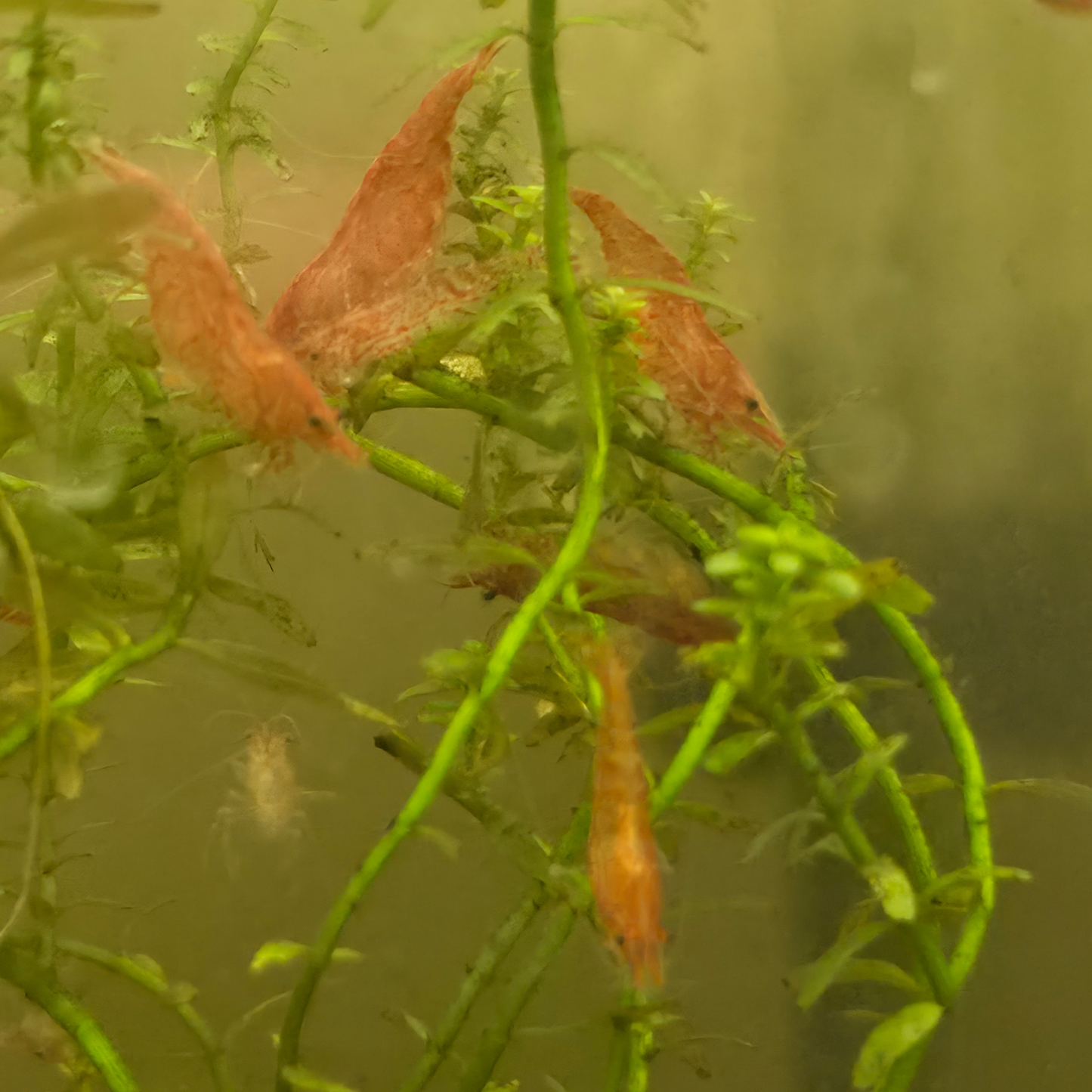
Please note: These shrimp are B-grade Red Cherry Shrimp, sometimes referred to as "culls." Unlike high-grade shrimp that display a solid, deep red colour, these shrimp have varying amounts of clear or translucent patches as their colour has begun reverting towards their natural wild form. Some individuals may still show excellent red coverage, while others may be much lighter in colour. Every shrimp is unique, and colour intensity will vary between individuals.
Although they may not have the intense colouration sought after by selective breeders, they are just as healthy, hardy, and active as higher-grade Red Cherry Shrimp. They make an excellent choice for anyone wanting an affordable clean-up crew, a thriving breeding colony, or simply to enjoy the fascinating behaviour of freshwater shrimp without paying premium prices.
Red Cherry Shrimp are constantly on the move, grazing on algae, biofilm, and microscopic organisms that naturally develop throughout the aquarium. While they certainly assist with keeping surfaces tidy, they should never be relied upon as the sole method of algae control. Like all aquarium inhabitants, they benefit from a varied diet and stable water conditions. A mature aquarium with plenty of live plants, mosses, driftwood, and hiding places will allow them to display their natural behaviour and provide newly moulted shrimp and shrimplets with safe places to shelter.
Temperament:
Red Cherry Shrimp are exceptionally peaceful invertebrates that spend most of their day grazing on algae, biofilm, and tiny microorganisms growing throughout the aquarium. They are social animals and feel far more secure when kept in groups, becoming noticeably more active as colony numbers increase. Although they don't actively school together, they naturally congregate while feeding and exploring.
Due to their small size, they should only be housed with peaceful tank mates. Even fish that are considered community species may opportunistically eat baby shrimp, so heavily planted aquariums with plenty of mosses and hiding places are highly recommended if you hope to establish a breeding colony.
Diet:
Red Cherry Shrimp are omnivorous scavengers that constantly graze throughout the aquarium, feeding on algae, biofilm, decaying plant matter, and leftover fish food. While a mature aquarium often provides a large portion of their daily diet, supplemental feeding is still essential to maintain good health, successful moulting, and breeding.
Offer a varied diet consisting of quality shrimp foods, algae wafers, blanched vegetables such as spinach or zucchini, and occasional protein-rich foods in small amounts. Overfeeding should be avoided, as uneaten food can quickly reduce water quality, which shrimp are particularly sensitive to.
Breeding Behaviour:
Red Cherry Shrimp are among the easiest freshwater shrimp to breed when kept in stable, well-maintained conditions. Mature females develop a visible “saddle” behind the head, which contains unfertilised eggs. After mating, these eggs are transferred under the female’s abdomen, where they are attached to her swimmerets and carried for approximately 3–4 weeks. During this period, the female is referred to as “berried”, as she continuously fans the eggs to keep them oxygenated and clean until they hatch.
Once development is complete, fully formed miniature shrimp emerge directly from the eggs without a larval stage. These tiny shrimplets immediately begin grazing on biofilm and microscopic organisms throughout the aquarium.
A mature aquarium rich in biofilm, mosses, leaf litter, and other natural surfaces greatly improves shrimplet survival. This environment provides both constant food sources and essential shelter for newly hatched shrimp. Avoid introducing fish that actively hunt small shrimp if your goal is to establish a stable breeding colony.
Care Guide:
- Species – Neocaridina davidi
- Common Name – Red Cherry Shrimp (B Grade)
- Origin – Taiwan (selectively bred freshwater shrimp)
- Temperament – Peaceful
- Diet – Omnivore / Algae grazer
- Minimum Tank Requirement – 20 litres
- Tank Level – All levels (primarily bottom and surfaces)
- Care Level – Easy
- PH Range – 6.5 – 7.5
- Temperature – 20 – 28°C
- Breed Type – Egg carriers
- Size – Up to 3 cm
- Sex – Un-sexed (mixed colony)
Mineral Requirements (Soft Water Setups):
In very soft water aquariums, including rainwater and RO (reverse osmosis) or naturally low-mineral water sources, it is important to ensure shrimp have access to sufficient minerals for healthy shell development and successful moulting.
One commonly used method is the addition of cuttlebone. Cuttlebone provides a slow-release source of calcium carbonate, which can help support shrimp by contributing to overall water hardness and supplying the minerals needed to form and harden new exoskeletons. Without adequate minerals, shrimp may struggle to moult properly or fail to develop strong shells.
However, care must be taken when using cuttlebone, as it does not provide precise control over water parameters.
Benefits:
- Provides a natural source of calcium for shell development and moulting
- Can slowly increase general hardness (GH) and carbonate hardness (KH) in soft water tanks
- Inexpensive and easy to source from most pet stores
- Can be broken into smaller pieces for more controlled use
Considerations:
- Mineral release is inconsistent and dependent on tank conditions, making dosing difficult to control
- May cause fluctuations in GH, KH, and pH, particularly in small or lightly buffered aquariums
- Can potentially raise pH up to around 7.8 in some systems, making it unsuitable for very soft-water or Caridina-style setups
- Not usually consumed directly by shrimp; they rely on dissolved minerals in the water rather than the solid material itself
- May not suit aquascaped tanks due to its appearance
For more stable results, many shrimp keepers prefer using dedicated remineralising products such as GH & KH or Shrimp powder designed specifically for freshwater shrimp, as these allow for more precise control over GH, KH, and overall water chemistry.
Tank Setup
Substrate & Colouration: Using a dark sand or gravel substrate is highly recommended. It helps shrimp feel secure and significantly intensifies their natural colouration.
Hiding Spaces: Provide plenty of rockwork, driftwood, and intricate shelters. This gives juvenile shrimp safe havens after moulting when their shells are soft and vulnerable.
Filtration & Flow: A sponge filter or air-driven setup is ideal to provide gentle surface movement and completely eliminate the risk of small shrimp or shrimplets being drawn into an intake. If utilizing a canister filter, always fit a fine pre-filter sponge over the intake grid.
Live Plants & Foraging: Incorporate heavy clumps of Java Moss, Christmas Moss, or Subwassertang to create an immediate foraging ground packed with natural biofilm. Floating species such as Frogbit or Duckweed are also excellent additions for absorbing excess nutrients.
Acclimation Guide:
- Float the Bag: Place the unopened bag in your aquarium and allow it to float for 15–20 minutes. This helps equalise the temperature between the bag and your tank water.
- Turn Off the Lights: Keep aquarium lighting off during acclimation to reduce stress and help the shrimp settle more calmly.
- Prepare a Clean Bucket or Container: Gently transfer the shrimp and all bag water into a clean bucket or container. Ensure it is completely free from soap, chemicals, or contaminants.
- Start the Drip Acclimation: Use airline tubing or a small siphon to begin a slow drip from your aquarium into the bucket. Aim for around 1–2 drops per second. This can be adjusted by tying a loose knot in the airline tubing and tightening or loosening it to control flow.
- Acclimate for 1–2 Hours: Continue the drip process slowly until the water volume in the bucket has gradually increased significantly. Shrimp are highly sensitive to changes in water chemistry, so a slower acclimation process is strongly recommended.
- Gently Transfer the Shrimp: Use a shrimp net or container to gently move the shrimp into the aquarium. Avoid pouring bucket water into the tank where possible to help maintain stable water quality.
- Watch and Settle: It is normal for shrimp to hide or remain still for several hours after introduction. Allow them time to adjust and avoid disturbance during this period.
- Feeding Behaviour: Newly introduced shrimp may not feed immediately. It is best to wait 12–24 hours before offering food, allowing them to settle and begin grazing naturally on biofilm in the aquarium.
For more detailed steps and tips, feel free to visit our Acclimation Guide in our Education tab to help make the transition as smooth as possible for your new shrimp.
Bucket & Drip Method (Recommended for Shrimp)
The bucket and drip method is the safest and most effective way to acclimate Red Cherry Shrimp due to their sensitivity to changes in water parameters such as pH, temperature, and TDS.
This method uses airline tubing to create a slow, controlled drip from your aquarium into a bucket containing the shrimp and their original transport water. A rate of approximately 1–2 drops per second is ideal. Flow can be adjusted by loosening or tightening a knot in the airline tubing.
Although this process takes longer, it greatly reduces the risk of shock and improves survival rates by allowing shrimp to gradually adjust to your aquarium conditions.
Always ensure shrimp are not exposed to sudden parameter changes, as they are significantly more sensitive than most fish species. A slow acclimation process is strongly recommended for best results.

Red Cherry Shrimp - B Grade
Red Cherry Shrimp - B Grade
Size Guide


Adult size 3cm
Selected size —
We recommend a starting group of 10–20 shrimp to build a confident, thriving breeding colony. Perfect as an affordable, active cleanup crew for your planted tanks! Discount applies automatically when added to cart.
Everything about shipping, care and guarantees is just below.
Shipping & Live Arrival Guarantee
Shipping & Live Arrival Guarantee
✅ Healthy Fish Guarantee - All orders are covered by our Live Arrival Guarantee with DOA (Dead On Arrival) policies in place for peace of mind.
🚚 $30 flat-rate shipping - Arrives within 1-4 business days, Free shipping on fish for orders over $150.
📦 Ordering supplies too? - Dry goods ship separately and have their own $11.95 shipping fee. This ensures faster delivery, so your fish never wait for equipment to be in stock. When ordering both fish and dry goods, both shipping fees apply ($30 + $11.95 = $41.95 total).
🌿 Packed safely - Fast, reliable shipping with oxygen, insulation and careful handling, packaging Includes insulated boxes, insulation such as news paper to keep everything warm and snug, heat packs during colder seasons, and high quality fish bags.
📦🐟 Live Fish Ship Mondays & Tuesdays Only - To minimise transit time and ensure your fish arrive happy and healthy.
🚚💨Express shipping ONLY - These orders will be defaulted to Express shipping so your fish get to you as fast as possible.
💙 Thank you - for helping us put the health and safety of our fish first!
👉 For more detailed information, please visit our shipping page.
Tank Requirements - Quick Overview
Tank Requirements - Quick Overview
If your aquarium is new, it may not be fully cycled yet. Newly set up tanks benefit from being fully cycled before adding fish, this process helps your new fish stay happy and healthy. Depending on your tank size, cycling can take up to 4–6 weeks or even longer, but there are ways to speed up this process to just a few days! If your tank has already been running for a while, you’re already good to go! Not sure what cycling means? Check out our guide on The Nitrogen Cycle for an easy explanation on what it is, and why it is important for your aquarium to thrive.
🐟 Want expert tips for your aquarium? Beginners can start with How to set up your aquarium, while everyone can check out Aquarium Maintenance & Care for ongoing tank tips!
How We Package & Ship Your Fish - Video
How We Package & Ship Your Fish - Video
Couldn't load pickup availability



Tank Mate Compatibility
✅ Compatible With
- Other Neocaridina Shrimp — Thrive in colonies and display more natural behaviour when kept together
- Peaceful Nano Fish — Small Rasboras, Otocinclus, and other gentle fish that are unlikely to bother adult shrimp
- Corydoras — Peaceful bottom dwellers that generally coexist well with adult shrimp
- Snails — Nerite, Mystery, Ramshorn, and other peaceful snails make excellent tank mates
❌ Avoid or Use Caution
- Large or Aggressive Fish — Most cichlids, large gouramis, and other predatory fish will view shrimp as food
- Bettas — Some individuals ignore shrimp, while others may hunt both adults and shrimplets
- Goldfish — Their large mouths and opportunistic feeding behaviour make shrimp easy prey
- Crayfish and Freshwater Crabs — These are natural predators and should not be housed with shrimp
Frequently Asked Questions
Why are these Red Cherry Shrimp cheaper than others?
These are B-grade Red Cherry Shrimp, sometimes referred to as "culls." They have varying amounts of clear or translucent colouration rather than the solid deep red associated with higher-grade shrimp. While they may not meet selective breeding standards for colour, they are just as healthy, active, and hardy as premium-grade Red Cherry Shrimp.
Will I receive bright red shrimp?
Colour will vary between individuals. Some shrimp may display strong red colouration, while others may have larger clear patches as they continue reverting towards their natural wild colouration. Every shrimp is unique, and specific colours cannot be guaranteed.
Will Red Cherry Shrimp clean my aquarium?
Red Cherry Shrimp constantly graze on algae, biofilm, and leftover food, making them an excellent addition to a clean-up crew. However, they are not a replacement for regular aquarium maintenance, water changes, or proper algae control.
How many Red Cherry Shrimp should I keep?
They are naturally social and do best in groups. We recommend starting with at least 10 shrimp, as larger colonies encourage more natural behaviour, improve breeding success, and help them feel more secure.
Will Red Cherry Shrimp breed in my aquarium?
Yes. When provided with stable water parameters, a mature aquarium, and plenty of hiding places, they breed readily. Tiny shrimplets hatch as miniature versions of the adults and will feed on naturally occurring biofilm throughout the aquarium.
Can I keep Red Cherry Shrimp with fish?
Yes, provided you choose peaceful tank mates carefully. Many community fish will happily eat baby shrimp, and larger species may also prey on adults. A heavily planted aquarium with mosses and hiding places greatly improves shrimp survival.
Do Red Cherry Shrimp eat live plants?
No. They are completely safe with healthy live plants. Instead of eating the plants themselves, they graze on algae, biofilm, and organic matter growing on the leaves and hardscape.
Why are my shrimp hiding after I add them to the aquarium?
This is completely normal. Newly introduced shrimp often spend a day or two exploring quietly while adjusting to their new environment. Providing plenty of plants, mosses, driftwood, and other hiding places will help them settle in and feel secure.
Do Red Cherry Shrimp need a mature aquarium?
Yes. A mature aquarium is highly recommended, as it provides the biofilm and microscopic organisms that shrimp naturally graze on throughout the day. Newly established tanks often lack these important food sources and can experience unstable water parameters, making them less suitable for shrimp.
Why are my Red Cherry Shrimp moulting?
Moulting is a completely normal part of a shrimp's life. As they grow, they shed their old exoskeleton to allow a new, larger one to harden. You may notice what looks like a dead shrimp in the aquarium, but it is often just the empty shell. It is best to leave the moult in the aquarium, as the shrimp and other members of the colony will usually consume it to recycle valuable minerals such as calcium.
Fish may vary slightly in colour, size, and pattern from those pictured or shown in images and videos. This is natural across all fish, whether bred in-house, locally sourced, or imported, as individual variation is part of what makes each fish unique!
Every fish is quality checked for health, behaviour, and appearance before leaving our fish room. Fish that are dispatched as juveniles will grow into their adult size and colouration over time with a good balanced diet and proper care.
Whether you need filters, fish nets, breeding boxes, or aquascape accessories, you can find all of our premium supplies here.